Beaches & Waterfronts
Welcome people.
Redirect geese.
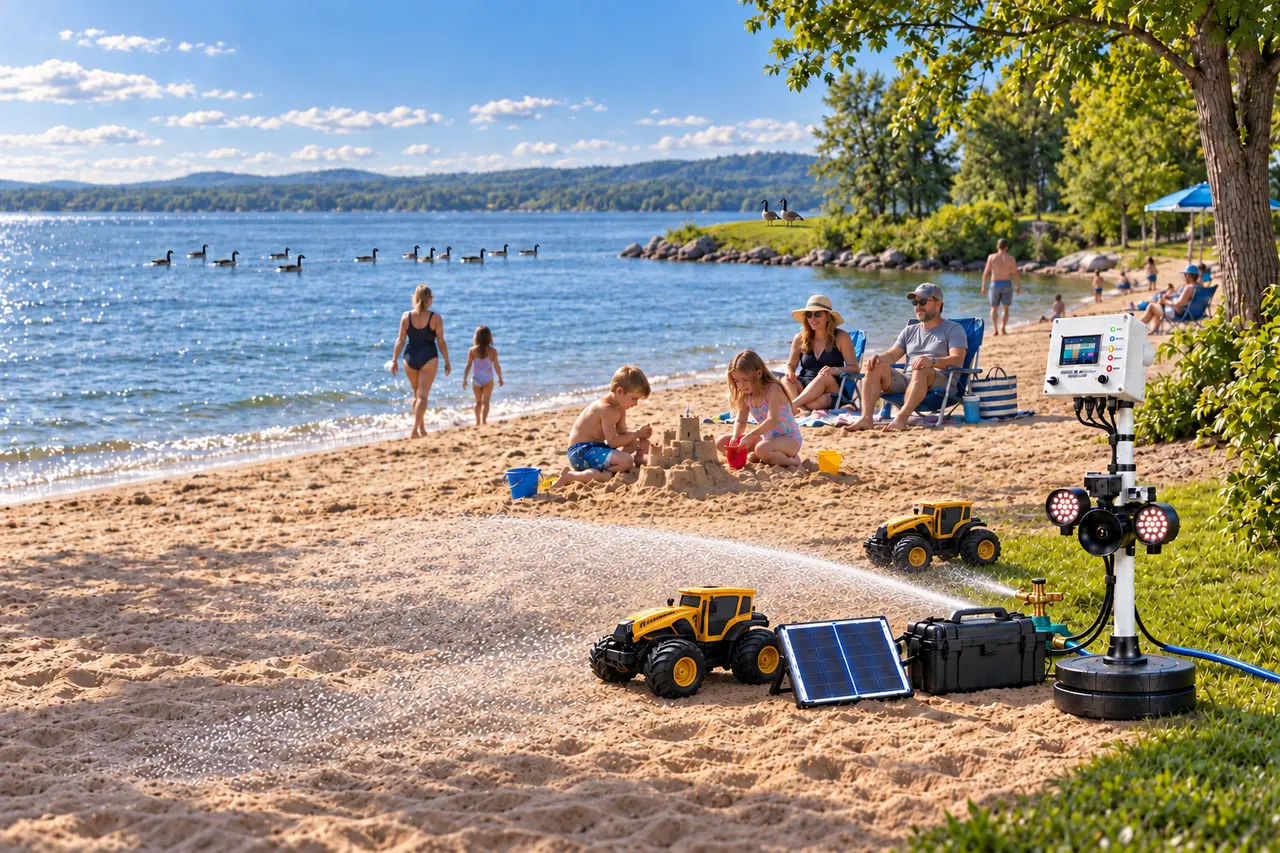
A portable Canada goose deterrent for beaches and public waterfronts, with an AI-ready vision layer designed to distinguish everyday beach activity from geese.
Explore the applicationThe right response for shared shorelines
Protect public space without treating every movement as a threat.
Public beaches change hour by hour. Families arrive, maintenance crews move through, water levels shift and Canada geese follow quiet stretches of sand and grass. A useful deterrent must respect normal public activity while remaining focused on wildlife pressure.
Goose Guard combines field sensing with a developing AI-enabled vision layer designed to help distinguish people from Canada geese. Because landing patterns move, the portable system can follow the pressure point instead of committing a waterfront to permanent infrastructure.
People-aware deterrence
Recognize the beach user. Respond to the goose.
Layered awareness helps keep routine human activity separate from a site-tuned wildlife response.
Detect
Monitor recurring goose approaches from open water, sand and adjoining grass.
Distinguish
Use site rules and the developing vision layer to separate people from the intended wildlife target.
Deter
Coordinate humane sound, light and water responses when wildlife enters the protected zone.
Reposition
Move the compact system as beach traffic, water levels and goose landing patterns change.
Portable by design
Take protection to today’s pressure point.
A public waterfront is never static. The current portable embodiment groups awareness, deterrence and off-grid power on one field-ready mast, allowing park teams to relocate protection without trenching, concrete pads or permanent shoreline construction.
- PowerSolar panel + protected lithium battery
- AwarenessField sensors + AI-ready camera
- ResponseSound + high-intensity light + water
- MobilityWeighted portable mast + handled equipment case
Flexible waterfront placement
Move as shoreline use changes.
A site review identifies preferred landing areas, changing public-use zones and practical places to reposition the sentinel as conditions evolve.
Early landing areas
Position near the sand, grass or access points geese favour before public use begins.
Peak public activity
Protect family-use zones while recognizing swimmers, walkers, maintenance crews and beachgoers.
Seasonal shoreline shifts
Reposition as water levels, vegetation, events and goose routes change.
The objective is simple.