Ravine Properties
Protect the yard.
Respect the ravine.
A humane wildlife deterrent for ravine properties, encouraging foxes, coyotes and other non-avian wildlife to remain beyond family-use lawns, decks and patios.
Explore the applicationA defined edge
Create a boundary without building a barrier.
Ravines provide valuable habitat and natural travel corridors. They can also bring foxes, coyotes and other wildlife close to lawns, decks, pets and the places where families gather.
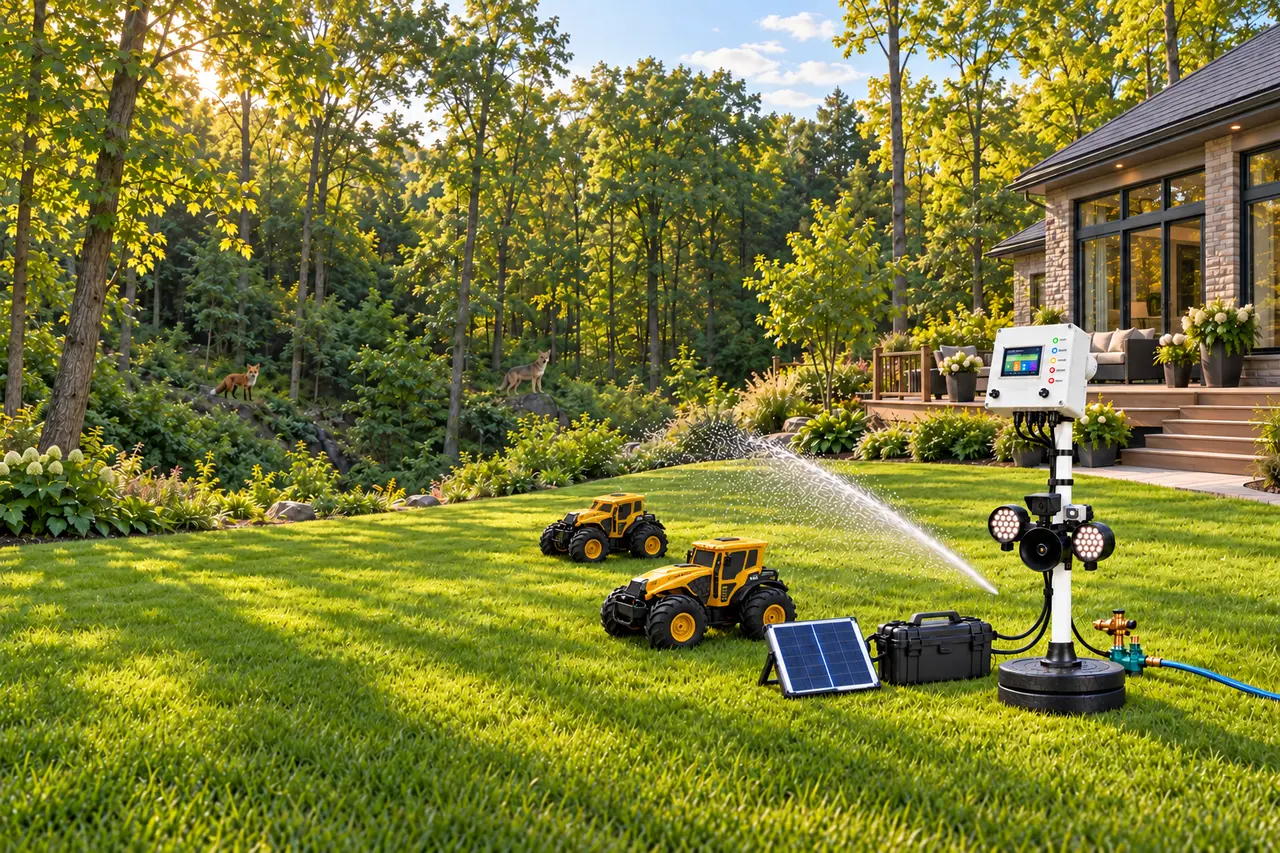
Goose Guard is designed to make the transition from ravine to yard less inviting using non-contact deterrence without closing off the view. Position the portable system near recurring approaches, then coordinate sound, light and water responses when wildlife enters the protected zone.
One coordinated response
Built to respond, adapt and reassure.
Layered deterrence can be tuned to the property boundary, household activity and changing wildlife routes throughout the year.
Detect
Monitor repeat approaches from the ravine using field sensors and the developing vision layer.
Decide
Apply site rules that account for residents, guests, pets, location and time of day.
Deter
Coordinate site-tuned sound, light and water responses that encourage retreat toward the ravine.
Reassure
Make operating status and recent activity visible to the homeowner.
The portable sentinel
Move protection as wildlife routes change.
The current portable embodiment brings the deterrent system together on one field-ready mast. It can be repositioned as vegetation, seasonal movement or the household’s outdoor use changes.
- PowerSolar panel + protected lithium battery
- AwarenessField sensors + AI-ready camera
- ResponseSound + high-intensity light + water
- MobilityWeighted four-foot portable mast
Ravine-aware placement
Protect the transition zone first.
A site review identifies how wildlife moves through the ravine edge, where animals enter the yard and which household areas should remain comfortable for daily use.
Ravine-edge approaches
Address familiar entry routes before wildlife crosses onto open lawn.
Decks and patios
Prioritize outdoor living areas closest to vegetation and cover.
Pet and play lawns
Shape the protected zone around the places where the household spends time.
The objective is simple.